Sometimes I have trouble sleeping, and this can have severe consequences the following day, especially if it is a workday.
For a long time I had been thinking that techniques must have been devised for helping people fall asleep, especially in high-stakes settings such as professional sports, key value driving professions, the military, etc. This means that finding such a technique is probably just a matter of a brief internet research. However, this idea would always occur to me while lying in bed, trying to fall asleep, which is never the right time to get up and start doing internet research.
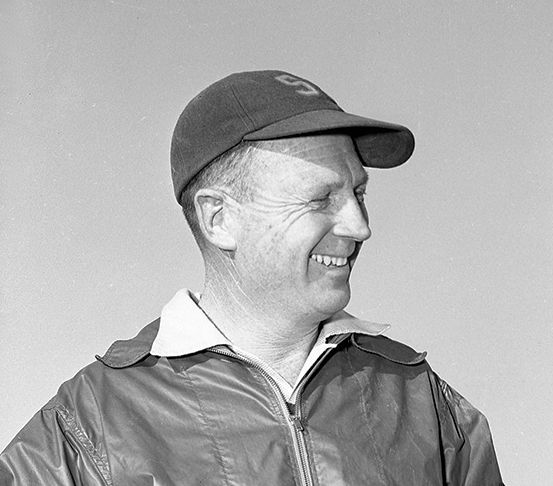
One day, while catching up with my friend Freek (a co-worker from a long time ago, when we used to work at TopDesk) I brought this up to him, and he searched for it right then and there, on his phone. He immediately found this technique, developed by famous U.S. track coach Bud Winter, originally intended to help Olympic athletes relax, and later adopted by the U.S. military. It can, supposedly, make someone fall asleep within a couple of minutes.
The technique is quite simple, but it requires consistent daily practice to train your nervous system to flip the "sleep switch". Reports have allegedly shown that in the military, after 6 weeks of exercising this method daily, it has a success rate of around 96%. If that is true, it is phenomenal.
So, I created an adaptation of Bud Winter's technique, for listening when going to sleep, the goal being to eventually be able to recall it from memory and to not have a need for the recording anymore.
In my adaptation, the text has been converted into a flat list of instructions, suitable for following along as you are listening to it. To do this, I had to remove some phrases that are unsuitable for do-as-you-listen narration.
I have also added a few more steps at the end about additional sensory detail, which I saw proposed somewhere, and seems like a very good idea.
One minor change I made to the original list of steps is that I moved the steps about relaxing the arms after the step about settling the torso, because I found that in order to settle my torso I often have to use my arms, but then I need to repeat the relaxing of the arms, so why not change the order so that the hands only need relaxing once.
So, here is my adaptation of the Bud Winter technique for falling asleep:
- Close your eyes.
- Breathe slowly.
- Relax your forehead,
- your jaw,
- your tongue,
- and the muscles around your eyes.
- Let your shoulders drop as low as they can go,
- as if they are sinking into the bed.
- Relax your neck.
- Settle your torso.
- Take a deep breath,
- and exhale.
- Relax your stomach muscles,
- and let go of any tension you are holding in your torso.
- Let your upper and lower arms go limp on one side,
- followed by the other.
- Relax your hands,
- and fingers.
- Relax your right thigh,
- then your right calf,
- right ankle,
- and right foot.
- Relax your left thigh,
- then your left calf,
- left ankle,
- and left foot.
- Your entire body should now feel heavy and limp.
- Imagine yourself lying flat on your back in a canoe,
- on a calm, serene lake,
- with nothing but a clear blue sky above you.
- Bring to your mind the sounds of the setting:
- gentle waves lapping at your boat,
- birds calling and chirping,
- frogs croaking from the shore,
- an insect buzzing by,
- indistinct, joyful human voices from a distant boat.
- Bring to your mind the smells of the setting:
- the cool humid air,
- the wet wood from the boat,
- soil, moss, and grass from the shoreline,
- green notes from water plants and trees around the lake.
I have tried the technique a few times so far, and each time I am surprised to find that certain groups of muscles, for example the muscles around my eyes, have been in tension up until that moment, and they would have remained in tension for who knows how long, had the narration not brought them to my attention. So, it seems like it does really help.
I created an mp3 file so that I can listen to it when going to sleep.
Here is version 2, which constitutes a considerable improvement over version 1:
Here is how I made it:
For converting the text to speech, I used the MAI (Microsoft AI) playground because it is free, and it is incredibly, astonishingly, mind-blowingly good. I experimented a bit and found that voice "Harper" with style "Softvoice" produced excellent results for my purposes. It does have a limit on the amount of text that it will process, so I had to do two prompts and receive two audio files.
For editing the audio, I used Audacity because it is a well-known, free, decently capable, and acceptably bug-free audio editor. Here is what I did in terms of audio editing:
- I aggressively de-essed the speech by adding the Bass and Treble realtime effect, and setting the dial for treble to -20dB.
- (In version 1 I had used the Filter Curve EQ effect to cut out everything above about 5 kilohertz, but later I decided that this was way too aggressive.)
- I slowed down the speech to 90% of what it was.
- (In version 1 I used 80%, but later I decided that this was too slow.)
- I inserted one second of silence between most phrases, in order to give the listener plenty of time to follow each instruction before the next instruction starts.
- I mixed it with the music. (See below.)
For the music, I used Google Gemini, because it is one of the few services that a) actually work, and b) do actually understand what I mean when I say "in the style of Brian Eno's ambient music". It only creates 30-second tracks, which is a joke, but for my purposes it was okay because ambient music can be repeated over and over again, especially when it is in the background with human voice in the foreground.
I decided that music is necessary as an introduction, in order to give me some time from the moment I press "play" on the bedside phone, to turn off the light, lie on the bed, and cover myself with the quilt before the actual instructions start playing. (In the beginning I was thinking of using several seconds of silence before the instructions begin, but I quickly realized that this would not work, because the problem with silence is that you never know whether you have actually started it, or whether you made a mistake and nothing is happening.)
Finding an A.I. service that would generate the music according to my specifications, and for free, was the hardest part.
- Most generative A.I. services out there simply do not generate music.
- ChatGPT said that it could not do it, then it added that it was capable of doing it with some workarounds. However, when I asked it to try some of those workarounds I realized that it was only wasting my time. There is no way to get ChatGPT to generate music.
- Suno and MusicGPT (no affiliation with ChatGPT) failed to understand my instructions, and created audio that was not what I wanted. (Yes, so maybe they refused to follow my instructions, due to copyright concerns, but refusal without a clear explanation is miserable failure in my book.)
- Udio demanded that I enable DRM on my browser, (I should have refused right then and there,) and once I did that, it went ahead and created some music which was decently close to what I had asked for, but it would, of course, not let me have it. How debauched is that?
- Soundraw does not seem to offer a text box to describe what you want in text; instead, it follows a multiple choice quiz approach, which is, of course, so stupendously limited as to be completely useless for my purposes.
- Only Google Gemini worked for me, although for most purposes, its 30-second limitation makes it about as useless as the rest.
I will leave you with a quote from Bud Winter:
Demand perfection of yourself and you will seldom attain it.
Fear of making a mistake is the biggest single cause of making one.
Relax: pursue excellence, not perfection.— Lloyd (Bud) Winter